Baby Cognitive Milestones: How Your Baby's Brain Develops
Baby Cognitive Milestones: How Your Baby's Brain Develops
Babies aren't blank slates—they're tiny scientists conducting experiments on the world. Drop the spoon. Watch parent pick it up. Drop spoon again. Fascinating. Repeat 47 times.
Cognitive development is how your baby learns to think, reason, solve problems, and understand the world. It's happening constantly—even when they're just staring at their own hands. Here's what's going on in that rapidly developing brain.
Cognitive Development: Month by Month
Newborn to 2 Months: Taking It All In
- Focuses on faces 8-12 inches away
- Prefers high contrast patterns (black and white)
- Recognizes voices—especially mom's
- Startles at sudden sounds
- Calms to familiar stimuli (your voice, heartbeat)
- Beginning of memory: Recognizes regular routines
3-4 Months: Cause and Effect Awakening
- Follows moving objects with eyes
- Recognizes familiar people from across the room
- Discovers hands: Stares at them, brings to mouth
- Cause and effect: Kicks mobile, mobile moves → kicks again!
- Anticipates: Gets excited when they see the bottle
- Attention span growing: Studies objects longer
5-6 Months: Exploration Mode
- Reaches for objects accurately
- Transfers toys hand to hand
- Mouths everything: Exploring texture, shape, taste
- Looks for dropped objects (briefly)
- Studies small details
- Shows curiosity: Reaches for new things
7-9 Months: Object Permanence Develops
- Object permanence: Knows things exist when hidden
- Searches for hidden toys: If partially hidden, will find it
- Understands "no" (even if they ignore it)
- Problem-solving: Works to get out-of-reach toys
- Imitates actions: Clapping, waving, banging toys
- Cause and effect mastery: Pushes buttons, opens lids
What is Object Permanence?
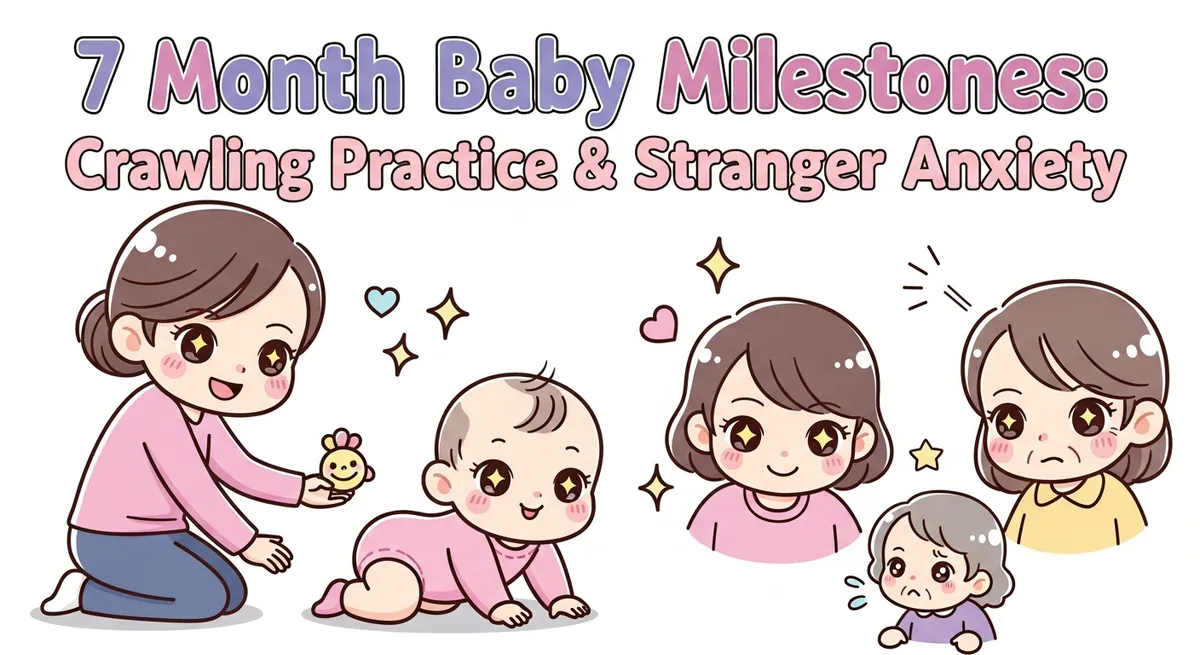
The understanding that things exist even when you can't see them. Before this develops, out of sight = out of mind. After it develops: baby knows you're still there when you leave the room (which is why separation anxiety kicks in!).
10-12 Months: Little Problem Solver
- Finds fully hidden objects
- Uses tools: Pulls blanket to get toy on it
- Trial and error learning: Tries different approaches
- Imitates new actions: Copying what you do
- Follows simple instructions: "Give me the ball"
- Points to request or share
- Pretend play begins: Phone to ear, feeding doll
Cognitive Milestones: Summary Table
| Age | Key Cognitive Skill | What You'll See |
|---|---|---|
| 1-2 months | Recognition | Recognizes your face and voice |
| 3-4 months | Cause & effect | Repeat actions that make things happen |
| 5-6 months | Exploration | Mouths, shakes, bangs everything |
| 7-8 months | Object permanence | Searches for partially hidden toys |
| 9-10 months | Problem-solving | Works to get what they want |
| 11-12 months | Imitation & pretend | Copies actions, begins pretend play |
How to Support Cognitive Development
The Best "Toys" Are Simple
- Containers and objects: Put in, dump out, repeat
- Stacking toys: Build up, knock down
- Cause-and-effect toys: Push button, something happens
- Everyday objects: Wooden spoons, plastic containers, safe household items
- Books: Touch-and-feel, lift-the-flap
Interaction Trumps Products
No toy replaces engaged interaction. Talking, playing games, responding to baby's cues—this is what builds brains. The $100 "brain-building" toy isn't better than peek-a-boo with you.
Follow Their Lead
Watch what interests them. If they're fascinated by a box, explore the box. If they want to drop things, let them drop things (safely). Child-led exploration builds confidence and curiosity.
Games That Build Brains
- Peek-a-boo: Object permanence, anticipation, joy
- Hide-and-seek with toys: Memory, searching, problem-solving
- Imitation games: Clapping, waving, silly faces
- Container play: In, out, sorting, filling
- Cause-and-effect play: Push, pull, drop, bang
When to Check In With Your Pediatrician
Cognitive development varies, but mention if your baby:
By 4 Months:
- Doesn't follow moving objects with eyes
- Doesn't respond to faces
- Shows no interest in toys or objects
By 9 Months:
- Doesn't look for hidden objects at all
- Doesn't recognize familiar people
- Doesn't respond to their name
- Shows no curiosity about surroundings
By 12 Months:
- Doesn't point or gesture
- Doesn't search for hidden objects
- Doesn't imitate actions
- Lost skills they previously had
Trust Your Instincts:
You know your baby best. If something feels off, it's worth checking—even if you can't pinpoint exactly what. Early intervention is most effective when started early.
Common Questions
"Should I buy 'educational' toys?"
Simple is often better. Expensive electronic toys don't build brains better than blocks, balls, and containers. Save your money for quality interaction time.
"How much should I 'teach'?"
You don't need to run baby drills. Talking, reading, playing, and responding to your baby IS teaching. Follow their interests—forced learning backfires.
"Is screen time hurting their brain?"
For under 18 months, limit screens (except video chatting). Babies learn from interaction, not screens. Background TV can actually interfere with learning.
The Bottom Line
Remember This:
Your baby's brain is building itself through every interaction, every exploration, every moment of curiosity satisfied. You don't need fancy programs or expensive toys—you need presence, responsiveness, and play.
The best brain-building activity is also the simplest: engaged, loving interaction with you. That's the secret. That's all there is.
Related Articles
Continue exploring with these helpful resources