Sleep Deprivation Survival: How to Function When Baby Won't Let You Rest
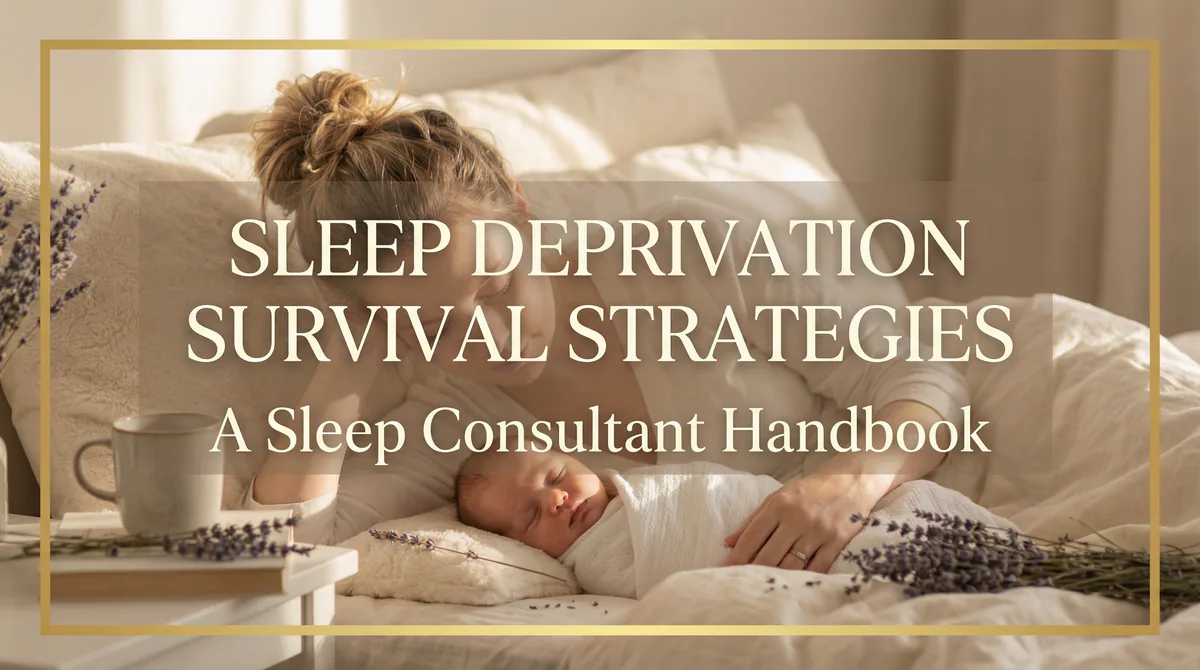
Sleep Deprivation Survival: How to Function When Baby Won't Let You Rest
Day 4. I put the TV remote in the refrigerator, called my husband by the dog's name, and cried because a commercial about paper towels was "just so beautiful." Welcome to new parent life.
Here's what nobody prepares you for: sleep deprivation doesn't just make you tired. It makes you a completely different person. Studies show that going 24 hours without sleep impairs you as much as a blood alcohol level of 0.10%—legally drunk in all 50 states. And new parents routinely operate on far less sleep than that, for weeks on end.
You can't "fix" newborn sleep (they're not broken, they're just new). But you CAN survive it with your sanity mostly intact. Here's how.
The Science of Why You Feel So Terrible
It's not weakness. It's biology.
Sleep deprivation affects:
- Cognitive function: Memory, decision-making, and problem-solving tank
- Emotional regulation: Everything feels bigger, scarier, sadder
- Physical coordination: Clumsiness, slower reflexes
- Immune system: You catch every cold baby brings home
- Pain perception: Everything hurts more
The good news? Your body adapts somewhat. The first two weeks are the worst. It gets better—not perfect, but better.
Survival Strategy #1: Sleep When Baby Sleeps (But Actually Do It)
I know. You've heard this advice 47 times and rolled your eyes at least 46. But here's the thing: it's the single most effective strategy, and most people don't actually do it.
Why You're Not Doing It:
- "But the dishes/laundry/emails..."
- "I can't fall asleep that fast"
- "It feels lazy"
- "I finally have time to myself"
The Reality Check:
Your #1 job right now is survival. Everything else—the dishes, the thank-you cards, the perfectly organized nursery—can wait. Sleep cannot.
How to Actually Do It:
- Prepare in advance: Keep bedroom dark, phone on silent, bed ready to collapse into
- Don't check your phone: The second you start scrolling, you've lost
- Even lying down counts: Rest without sleep still helps
- Set an alarm: If you're worried about sleeping too long, give yourself permission to sleep 30-45 minutes guilt-free
Survival Strategy #2: Shift Sleep (If You Have a Partner)
This is the game-changer for two-parent households. Instead of both of you waking for every feed, divide the night.
Sample Schedule:
| Time | Parent A | Parent B |
|---|---|---|
| 8pm - 1am | PROTECTED SLEEP (earplugs, separate room) | On duty (all wakes, all feeds) |
| 1am - 6am | On duty | PROTECTED SLEEP |
Result: Each parent gets a guaranteed 5-hour stretch. That's almost a full sleep cycle. It's transformative.
For Breastfeeding Parents:
- Pump before your sleep shift so partner can bottle feed
- Or: Partner brings baby for feed, handles burping/diaper/soothing back to sleep
- Key: The off-duty parent does NOTHING during their sleep window except sleep
Survival Strategy #3: The Power of Strategic Caffeine
Caffeine is a tool. Use it wisely.
The Rules:
- Timing matters: Caffeine takes 15-45 minutes to kick in and lasts 5-6 hours
- Cut off time: No caffeine after 2pm if you want any hope of sleeping
- Don't front-load: Space it out rather than chugging three cups at 7am
- The "nappuccino": Drink coffee, immediately nap for 20 minutes. Wake up as caffeine kicks in. Sorcery.
If Breastfeeding:
Moderate caffeine (2-3 cups coffee/day) is generally safe. Some babies are more sensitive—if yours seems fussy after you've had caffeine, experiment with reducing intake.
Survival Strategy #4: Protect Your Brain
When you can't get more sleep, you can at least minimize the damage.
Write Everything Down
Your short-term memory is shot. Accept it. Use:
- Phone notes for tasks
- Feeding/diaper tracking app (we like Huckleberry)
- Sticky notes on the bathroom mirror
- Recurring alarms for medications, appointments
Lower Your Standards
Now is not the time to:
- Start a new project
- Make major decisions
- Have difficult conversations with your partner
- Drive long distances alone
- Operate heavy machinery (I'm not kidding)
Outsource What You Can
- Grocery delivery
- Meal kit services
- Paper plates (environmental guilt can wait)
- Robot vacuum
- Saying yes when anyone offers help
Survival Strategy #5: The Emergency Toolkit
For Those 3am Moments When You're About to Lose It:
- Put baby down safely (crib, bassinet, pack n play)
- Walk away for 5 minutes—yes, even if they're crying
- Splash cold water on your face
- Take 10 deep breaths
- Remember: This moment will pass. This phase will end.
It's Okay to Put Baby Down and Walk Away
A crying baby in a safe sleep space is fine for a few minutes while you collect yourself. A frustrated, exhausted parent is a safety risk. Taking a break is responsible parenting.
Keep These Within Reach:
- Water bottle (dehydration worsens fatigue)
- Easy snacks (protein bars, crackers, fruit)
- Phone charger
- Something to watch that doesn't require brain cells (reality TV exists for this reason)
- Extra burp cloths and diapers
Survival Strategy #6: Know Your Limits
Normal Sleep Deprivation:
- Foggy thinking
- Increased irritability
- Crying easily
- Clumsiness
- Forgetfulness
Signs You Need Help:
- Thoughts of harming yourself or baby
- Unable to care for baby safely
- Hallucinations
- Depression/anxiety that doesn't lift
- Falling asleep while holding/feeding baby in unsafe situations
Call Your Doctor If:
You're experiencing any of the warning signs above. Sleep deprivation can trigger or worsen postpartum depression and anxiety. This isn't weakness—it's brain chemistry. Help exists.
988 Suicide & Crisis Lifeline: Call or text 988
Postpartum Support International: 1-800-944-4773
The Timeline: When Does It Get Better?
| Age | What to Expect |
|---|---|
| 0-2 weeks | Peak difficulty. Night and day are meaningless. Survival mode. |
| 2-6 weeks | Still hard, but you're adapting. May see slightly longer stretches (2-3 hours). |
| 6-12 weeks | First smile! Circadian rhythm developing. Some babies start one 4-5 hour stretch. |
| 3-4 months | Sleep regression hits many. Dark days. It passes. |
| 4-6 months | Many babies ready for sleep training if you choose. Longer stretches possible. |
| 6-12 months | Gradual improvement. Many babies sleeping 6-8+ hour stretches. |
Key truth: Every baby is different. Some sleep through at 8 weeks. Some don't until well past a year. Both are normal. Comparison is the thief of sanity.
The Bottom Line
Remember:
This is temporary. You will sleep again. Right now, you're doing one of the hardest things a human can do—keeping a tiny helpless creature alive while operating on catastrophically insufficient rest.
You're not failing. You're fighting. And you're winning, one delirious day at a time.
Be gentle with yourself. Lower every bar. Accept every offer of help. Sleep whenever physically possible. And know that millions of parents have survived this fog and emerged on the other side—exhausted but intact.
You will too.