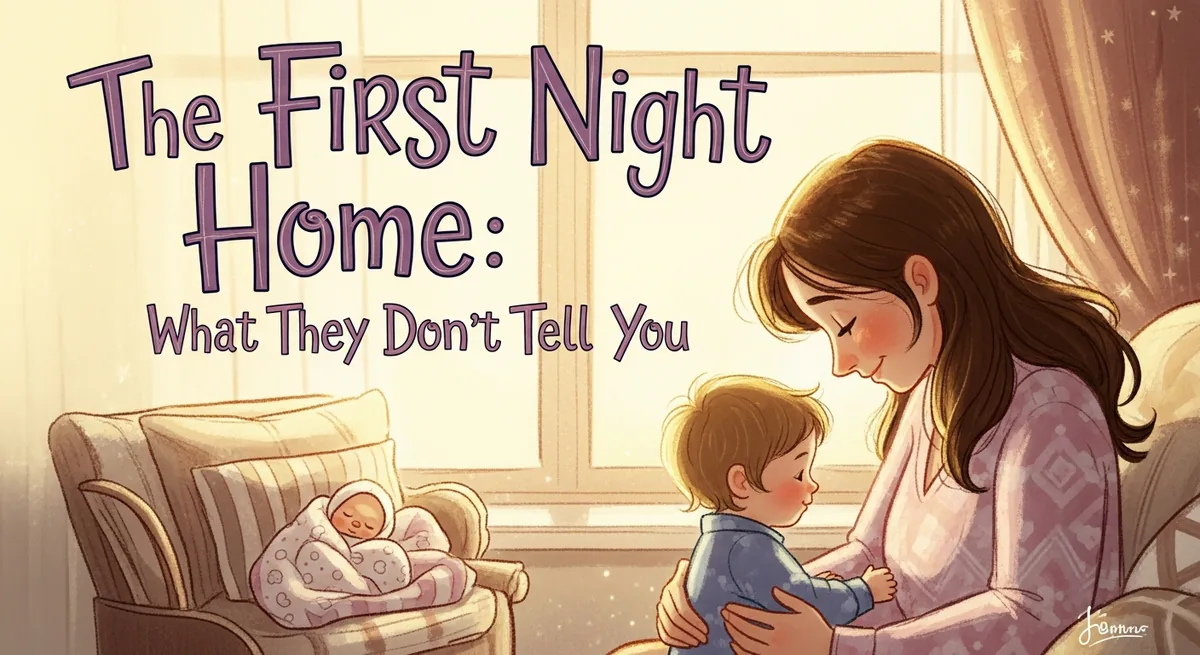
Your First Night Home With Baby: The Unfiltered Truth
Your First Night Home With Baby: The Unfiltered Truth
We got home at 4pm. By 4:15pm, we were both crying. The baby was crying. The dog was confused. Nobody knew what they were doing. This is normal.
Here's what the hospital doesn't tell you: for the past 2-4 days, you've had a call button. Push it, and a trained professional appears to handle whatever crisis is unfolding. That button doesn't exist at home. There's just... you. And a tiny human who depends entirely on you now.
This guide is for that first night—and the small hours when everything feels impossible. You're going to be okay. Here's how to survive it.
Before You Leave the Hospital
Questions to Ask (Before They Kick You Out):
- How do I know if baby is eating enough?
- What should baby's diapers look like?
- When should I call the pediatrician vs. go to the ER?
- What warning signs should I watch for?
- Is baby's feeding going okay? (Get that lactation consultant visit!)
Supplies Check:
- Car seat properly installed (rear-facing, at correct angle)
- Going-home outfit that's not complicated
- Blanket for the car (not under car seat straps!)
- Postpartum supplies for mom
- Phone chargers (you'll need them)
The Drive Home: Why It's Terrifying
You've driven thousands of miles in your life. This 20-minute drive will feel like the longest and most dangerous journey you've ever taken. Every pothole is a threat. Every other driver is a maniac.
This is normal. Your brain is flooded with protective hormones. You're hyper-vigilant. It passes.
Walking Through the Door
The moment you cross the threshold with your baby, something shifts. In the hospital, you were a "patient." Now you're just... a parent. Alone. It's simultaneously beautiful and absolutely terrifying.
First Hour Home Checklist:
- Don't rush: Stand there. Look at your baby. Let it sink in.
- Put baby somewhere safe: Bassinet, crib, or someone's arms
- Eat something: Actual food. You probably haven't eaten properly in days.
- Text your people: "We're home. Need quiet for a few days."
- Set up your station: Water, snacks, phone charger, burp cloths, where you'll be spending most of your time
When Evening Falls: The Witching Hour
Newborns are typically fussiest between 5pm and 11pm. Nobody knows exactly why. Some theories involve digestion, overstimulation, or babies just being tiny dictators.
Survival Strategies:
- Cluster feeding is normal: Baby may want to nurse every 30-60 minutes. This is exhausting but biological.
- Movement helps: Bouncing, swaying, walking, the car seat on top of the dryer (supervised!)
- Skin-to-skin: Strip baby to diaper, you to minimal clothing, cover with blanket
- White noise: Shushing, running water, vacuum sounds (babies love weird sounds)
- The 5 S's: Swaddle, Side position, Shush, Swing, Suck (pacifier or feeding)
The Night Itself: Hour by Hour
| Time | What's Probably Happening | What to Do |
|---|---|---|
| 9pm - 12am | Baby may still be fussy or cluster feeding | Take shifts if possible. Accept it. |
| 12am - 3am | Possibly the "best" stretch of sleep (2-3 hours) | SLEEP. Not scrolling. Not staring. Sleep. |
| 3am - 6am | More frequent waking. Dawn approaches. | Feed, change, cuddle, repeat. |
| 6am+ | You survived. Baby may settle as light comes. | Feel proud. You did it. |
Reality Check:
Newborns typically wake every 2-3 hours to feed. This is biologically normal and necessary for their growth. You're not doing anything wrong. They're not broken. This is just how new humans work.
What to Do When You Don't Know What to Do
The Basic Troubleshooting Checklist:
- Hungry? Offer breast/bottle even if they "just ate"
- Wet/dirty diaper? Check and change
- Too hot/cold? Feel their chest, not hands/feet
- Overstimulated? Dark, quiet room, minimal interaction
- Undertimulated? Change of scenery, different position
- Want to be held? Most common need. Just hold them.
- None of the above? Sometimes babies just cry. It's okay.
Safe Sleep: The Non-Negotiables
You're exhausted. The temptation to fall asleep with baby on the couch or bring them into bed is real. Please, please follow safe sleep guidelines:
- Alone: Nothing in the crib/bassinet except baby
- Back: Always on their back, even if they hate it
- Crib: Flat, firm surface designed for infant sleep
The Danger Zone:
Couches and recliners are the most dangerous places for baby sleep—higher risk than bed-sharing. If you're too tired to function safely, wake someone else up or place baby in their bassinet before you fall asleep.
When to Call for Help
Call Your Pediatrician If:
- Fever over 100.4°F (38°C) rectal
- Refusing to eat multiple times in a row
- Very difficult to wake
- Not making wet diapers
- Yellow or greenish skin color
- Labored or rapid breathing
- Anything that feels seriously "off" to you
Call 911 If:
- Not breathing or turning blue
- Unresponsive
- Seizure activity
Taking Care of Yourself
This night is about baby, yes. But you also just went through something massive (birth, or preparing for a baby through adoption/surrogacy). Your needs matter too.
- Eat real food: Even if it's leftovers or delivery. Your body needs fuel.
- Hydrate: Especially if breastfeeding. Water bottle always within reach.
- Accept that you'll cry: Hormones. Overwhelm. Joy. Fear. All of it. Let it out.
- Ask for help: If you have a partner, take shifts. If you have family available, use them.
- Shower if you can: It seems small but feels huge.
The Morning After
You survived. The sun is up. You're a little delirious, a lot tired, and possibly covered in substances you'd rather not identify.
This is victory.
Every night gets a tiny bit easier. Not linearly—there will be hard nights for weeks. But you're learning your baby. They're learning you. You're figuring this out together.
The Bottom Line
Remember This:
The first night is the hardest because everything is new. Your baby doesn't need perfect—they need present. You don't have to know what you're doing. You just have to keep trying.
You're already doing it. You're already a parent. And you're going to be great at it.