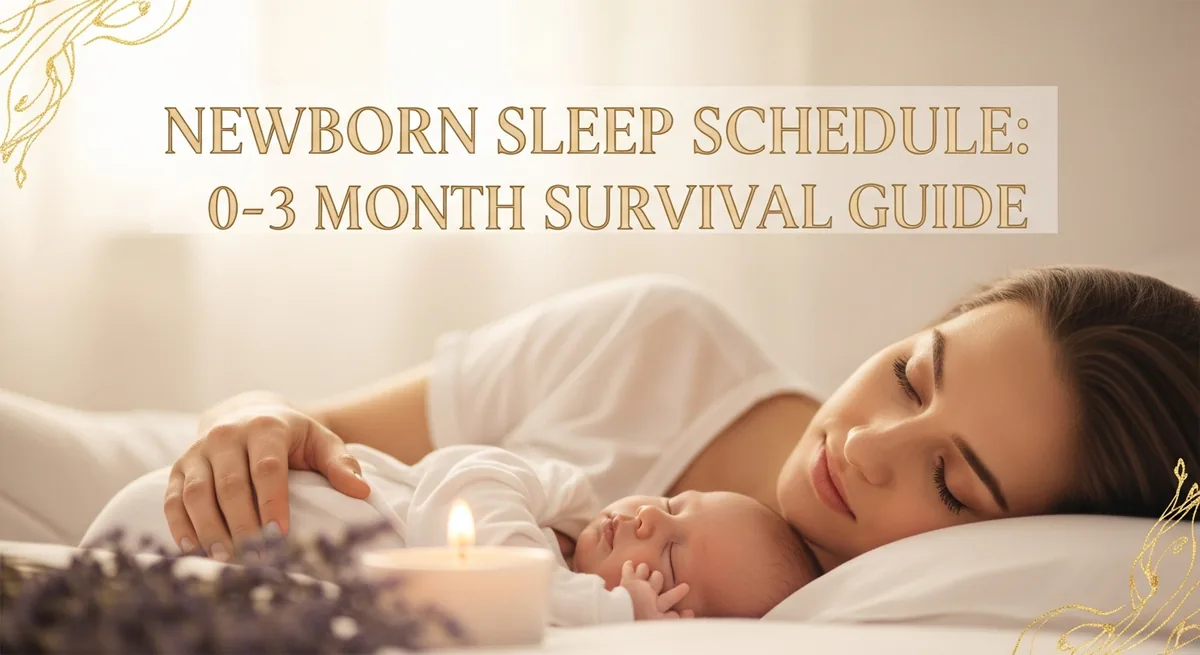
Safe Co-Sleeping With Your Newborn: Practices, Guidelines, and Honest Trade-Offs
Safe Co-Sleeping With Your Newborn: Practices, Guidelines, and Honest Trade-Offs
The Conversation Everyone Has But Nobody Talks About Out Loud
The American Academy of Pediatrics is clear: room-share without bed-sharing. Keep your baby in your room but in a separate sleep surface. This is the safest approach. And then reality happens. Your baby won't sleep in the separate surface. You're exhausted beyond belief. Bed-sharing seems like the only way anyone gets sleep. You feel guilty about even considering it. You search for "safe bed-sharing" at 3 AM knowing you're probably doing it anyway.
I'm not here to judge. I'm here to be honest about the research, the actual risks, and how to reduce them if you're going to bed-share. Because the conversation isn't "bed-sharing vs safe sleep"—it's "room-sharing without bed-sharing vs bed-sharing with risk reduction." Let's talk about that.
What the Research Actually Says (Not the Simplified Version)
The AAP recommendation is clear, but the research is more nuanced:
The Recommendation
Room-sharing without bed-sharing for at least 6 months, ideally 1 year. This is the safest approach supported by research.
Why This Recommendation
Bed-sharing increases SIDS risk compared to room-sharing without bed-sharing. The increased risk is real and measurable. But it's not uniformly distributed—certain factors dramatically increase risk while others don't significantly change it.
The Nuance
Risk factors during bed-sharing include:
- Parental substance use (alcohol, drugs, medications): Dramatically increases risk
- Parental sleep deprivation: Increases risk significantly
- Soft surfaces: Memory foam, pillows, blankets increase risk
- Overheating: Excess blankets, overdressing increase risk
- Accidental falls or rolling: Can occur with exhausted parents
- Unintentional bed-sharing: Falling asleep holding baby on couch or chair increases risk dramatically
What Reduces Risk During Bed-Sharing
If you bed-share, certain factors reduce (but don't eliminate) risk:
- Firm mattress (not soft memory foam or pillow-top)
- No pillows or blankets over baby
- Back sleeping position
- No alcohol/drug use by parents
- Sober, alert parent
- Appropriate room temperature
- Baby not trapped between parents or wall
Major Risk Factors During Co-Sleeping
Let's be specific about what actually increases risk:
Parental Alcohol/Drug Use (MAJOR RISK)
This is the single biggest risk factor. Parents who use alcohol or drugs (including marijuana) should NOT bed-share. Their ability to respond to baby, avoid rolling onto baby, and maintain awareness is impaired. This is non-negotiable.
Parental Exhaustion
Severely sleep-deprived parents have slower reaction times, reduced awareness, and impaired judgment. If you're so exhausted you're falling asleep immediately, bed-sharing increases risk. This is why having a partner or support system matters—someone needs to be alert.
Soft Surfaces
Memory foam mattresses, pillow-top beds, waterbeds—these conform to baby's shape and increase suffocation risk. A firm, hard mattress reduces risk. Your expensive mattress actually increases SIDS risk for babies.
Pillows and Blankets
Any soft object near baby increases suffocation risk. This includes decorative pillows, down comforters, quilts, anything that could cover baby's face.
Overheating
Too many blankets, overdressing baby, room too warm—all increase SIDS risk. Room should be 68-72°F and baby should not be overheated.
Unintentional Bed-Sharing
The riskiest scenario: falling asleep on a couch or chair while holding baby. This dramatically increases accidental suffocation and rolling risks. If you're going to co-sleep, bed with firm mattress is safer than accidental couch sleeping.
Safe Co-Sleeping Practices (If You Choose It)
If you're going to bed-share, here's how to reduce risk:
Sleep Surface
Firm mattress (not soft or memory foam), fitted sheet only, no pillows or blankets covering baby, no bed rail, nothing between baby and firm surface.
Baby Position
Back sleeping position always. Face clear of any obstruction. No pillows under baby's head.
Temperature
Room 68-72°F, appropriate clothing (not overdressed), feel baby's neck to ensure not overheating.
Parental Sobriety
No alcohol or drugs for the parent bed-sharing. This is non-negotiable for safety.
Parental Alertness
At least one parent should be alert and aware. If you're both exhausted, this isn't safe.
Avoiding Suffocation
Ensure baby cannot be trapped between parents, against wall, or under blankets. Some families use a cosleeper attached to the bed (safer than full bed-sharing but still close).
Safer Alternatives That Still Allow Closeness
Before choosing full bed-sharing, consider these safer alternatives:
Cosleeper
A bed-like structure that attaches to your bed, keeping baby in separate sleep surface but immediately next to you. This allows hand-contact, easy feeding access, and safety of separate surface. This is the AAP-preferred option if you want close sleeping.
Bassinet Beside Bed
A bassinet positioned right next to your bed, close enough to reach baby without getting up. Still provides the safety of separate surface with the closeness of proximity.
Room-Sharing Without Bed-Sharing
Baby sleeps in their own crib/bassinet in your room. You can reach baby, hear them, respond quickly. This is safest and what research supports.
Why These Matter
If your reason for bed-sharing is "I need to be close to my baby" or "feeding is easier," these alternatives solve that problem while reducing SIDS risk.
The Honest Conversation About Co-Sleeping
Let's be real about why parents choose bed-sharing:
Connection and Bonding
Many parents find bed-sharing creates a sense of closeness and connection. This is real. You feel your baby next to you, you respond quickly, it feels intimate. A cosleeper or room-sharing can provide similar connection with less risk.
Sleep Convenience
Bed-sharing is convenient for nighttime feedings. You don't have to get up. You can feed while half-asleep. This is true—and it's also why unintentional bed-sharing (falling asleep on couch while holding baby) is so dangerous.
Your Baby Won't Sleep Elsewhere
Sometimes it genuinely feels like bed-sharing is the only option. Your baby won't sleep in the bassinet. You're desperate. Bed-sharing seems like survival. If this is your situation, do it as safely as possible—but also explore alternatives like cosleepers or different bassinet positioning.
The Judgment and Guilt
Parents who bed-share often feel guilty, judged, and defensive. Meanwhile, parents who room-share without bed-sharing sometimes feel sanctimonious. The reality: if you're bed-sharing and doing it as safely as possible, that's your family's choice. If you room-share without bed-sharing, you're following the safest recommendation. Both involve trade-offs.
Frequently Asked Questions About Co-Sleeping
Q1: Is bed-sharing safe at all?
It increases SIDS risk compared to room-sharing without bed-sharing. But if done safely (firm mattress, no pillows, no substances, alert parent, back sleeping), risk is reduced. It's not as safe as room-sharing, but safer than unsafe bed-sharing or unintentional couch sleeping.
Q2: What's the difference between bed-sharing and room-sharing?
Bed-sharing: baby sleeps in your bed. Room-sharing: baby sleeps in separate surface in your room. Room-sharing is recommended as safer.
Q3: Is a cosleeper safer than bed-sharing?
Yes. A cosleeper attached to your bed provides closeness while maintaining separate sleep surface, which is safer than full bed-sharing.
Q4: When is bed-sharing riskier?
With parental alcohol/drug use, soft surfaces, pillows/blankets, overheating, excessive parental exhaustion, unintentional sleeping (couch/chair).
Q5: Can I bed-share safely if careful?
You can reduce risk through safe practices, but it's still riskier than room-sharing without bed-sharing. Room-sharing is the recommended safest approach.
Q6: What if bed-sharing is my only option?
Do it as safely as possible: firm mattress, no pillows, back sleeping, alert parent, appropriate temperature. But also explore whether cosleeper or different bassinet positioning might work.
Q7: When should I stop bed-sharing?
Many families transition to separate sleeping between 6 months-2 years. Once baby can roll and move independently, bed-sharing becomes less safe.
Make Informed Decisions for Your Family
The research is clear: room-sharing without bed-sharing is safest. But the real world is complex. If you're bed-sharing, understand the risk factors, eliminate what you can, and minimize what you can't. If you're room-sharing without bed-sharing, you're following the recommended approach. If you're exploring cosleeping, you're finding a middle ground.
Whatever you choose, make it an informed decision based on your family's actual situation, not guilt or judgment.
Explore SoulSeed's complete newborn guides for more on sleep safety, alternatives, and support. Because safe sleep looks different for different families. 💙